

Power generation inspection cameras are not one type of tool. A gas turbine borescope, a push camera for boiler tubes, and a PTZ camera for a large vessel solve different access problems inside the same plant.
If you are choosing equipment for an outage, preventive maintenance program, or troubleshooting job, start with the component and the inspection route. The right camera is the one that reaches the target, gives the required view, and produces the evidence your maintenance team needs. AIT's Power Generation inspection camera collection brings several of these RVI approaches together.
Use an articulating borescope for tight, complex internal routes such as turbines and rotating machinery. Use a push camera when the inspection follows a tube or pipe over distance. Use a PTZ system when the target sits inside a larger chamber, vessel, header, tank, or other space that needs wide-area remote viewing.
Start With the Power Plant Component, Not the Camera Category
A single plant can contain turbines, boilers, heat exchangers, condensers, piping, headers, generators, tanks, pressure vessels, and other balance-of-plant equipment. The access geometry changes from one asset to the next, so the same camera will not be the best fit everywhere.
Borescopes for Gas Turbine and Rotating Equipment Inspection
Gas turbine borescope inspection is one of the clearest cases for an articulating videoscope. The probe has to pass through a small access point, turn toward internal surfaces, hold a useful view, and capture enough detail for the inspection procedure.
Depending on the asset and inspection plan, plant teams may be looking at blades, vanes, combustion areas, compressor sections, seals, gearboxes, or other internal machinery. Probe diameter, working length, direction of view, articulation, lighting, image quality, and measurement capability can matter more than the size of the display.
- Smallest borescope access opening through the complete route.
- Working length from the access port to the farthest inspection surface.
- Forward, side, or interchangeable viewing requirements.
- Articulation needed to turn toward and hold the target.
- Visual-only inspection or dimensional measurement requirement.
- Image, video, annotation, and report requirements for the outage record.
Do not choose a turbine borescope from camera resolution alone. Confirm the smallest opening, reach, viewing direction, bend geometry, measurement need, and whether the probe can hold the target view before comparing secondary features.

For Measurement-Driven Turbine Inspection
Mentor Visual iQ+ is a strong starting point when the inspection has to do more than record a visual finding. Its measurement and documentation workflows fit power-generation applications where engineering review depends on dimensional evidence.
For a broader range of probe configurations, also compare Mentor Flex+ and the long-reach VUMAN E3/E3+.
Push Cameras for Boiler and Heat Exchanger Tube Inspection
A push camera becomes a better fit when the inspection follows the inside of a tube or small pipe over distance. Instead of steering around complex turbine geometry, the priority shifts toward camera-head size, push-cable behavior, reach, lighting, recording, and how quickly the inspector can move from footage to a usable report.
For boiler and heat exchanger work, that distinction matters. A general pipe camera may reach the tube, but a purpose-built inspection workflow can be more useful when crews are checking many tubes during a limited outage window.
Confirm camera-head clearance through the smallest tube ID and entry restriction.
Match cable length to the longest run from the actual operator position.
Keep the camera positioned so the tube wall is consistently visible.
Record useful footage and stills against the tube map or inspection plan.
Make sure the system fits the plant's handoff, review, and reporting workflow.

For Boiler and Heat Exchanger Tube ID Inspection
Edgevision is built around boiler and heat exchanger tube inspection, combining the push-camera hardware with field viewing, recording, reporting tools, and optional AI-assisted review.
For more conventional small-tube work, compare minCord 5 and minCord XL.
PTZ Systems for Headers, Vessels, Tanks and Large Internal Spaces
PTZ inspection cameras solve a different problem. Once the access opening is large enough for the camera head, the job may be less about threading a probe through a narrow passage and more about scanning a wide internal area from a remote position.
That makes pan, tilt, zoom, lighting, cable length, camera-head diameter, deployment method, and environmental requirements central to the decision. In power generation, PTZ systems can be useful for headers, tanks, vessels, chambers, submerged areas, and other large spaces where a close-contact borescope view would be too narrow.
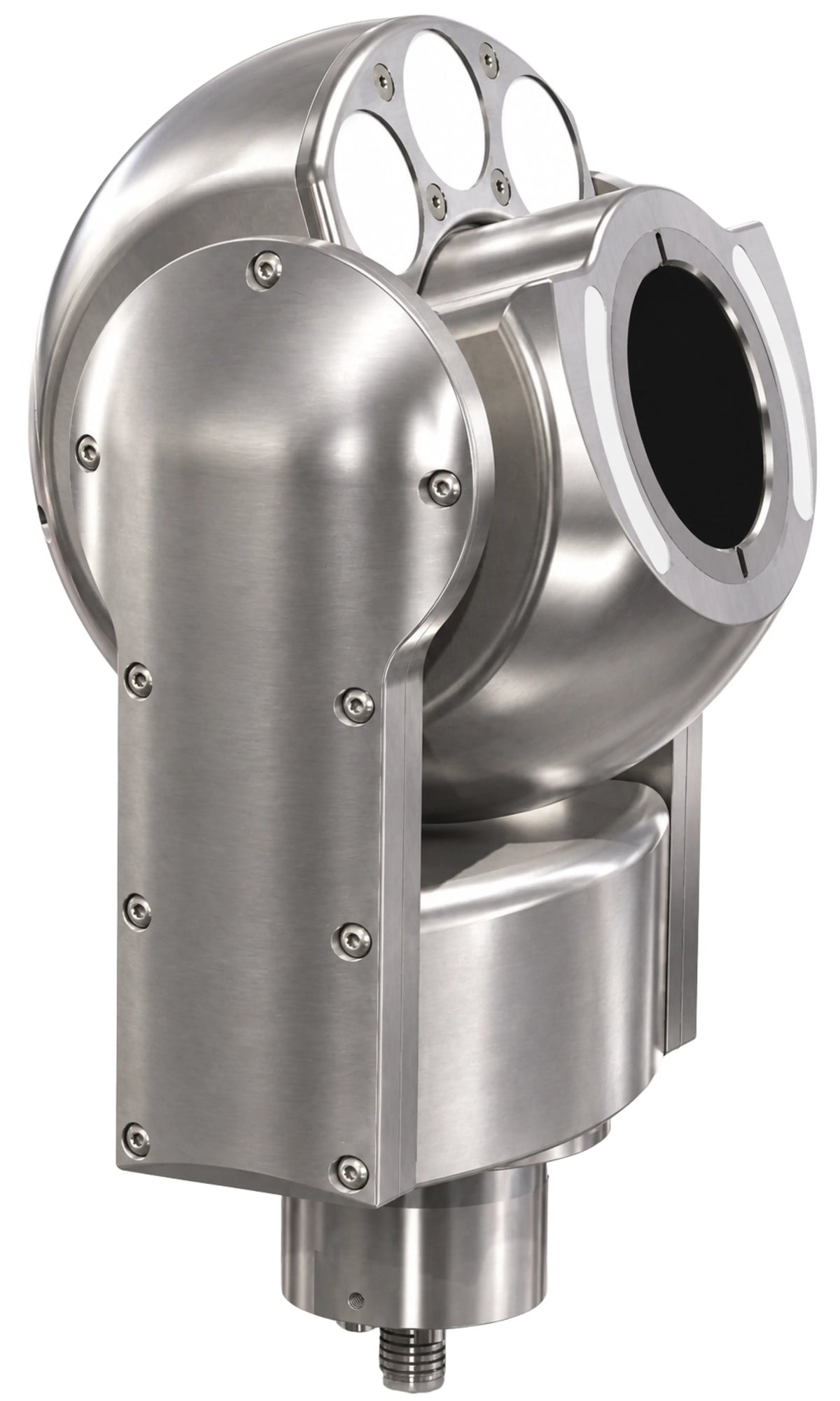
For Long-Range Wide-Area Remote Viewing
XyloQ is the larger-format PTZ option for tanks, vessels, chambers, large pipes, submerged areas, and industrial structures where the operator needs to scan a large area from a remote deployment point.
When the access opening is smaller, compare the Micro PTZ HD Camera System and PTZ45XD Inspection System.
Borescope vs Push Camera vs PTZ: What Changes the Buying Decision?
If the camera must steer through a small route, start with a borescope. If it mainly needs to travel down a tube, start with a push camera. If it enters a larger space and then needs to look around, start with PTZ.
Seven Questions to Answer Before You Request a Quote
- Component: turbine, boiler tube, heat exchanger, header, tank, vessel, generator, gearbox, piping, or another asset.
- Access: smallest opening and any tighter restriction farther along the route.
- Reach: complete distance from the operator position to the farthest target.
- Steering: whether the camera travels straight, turns through a complex route, or enters an open space.
- Measurement: visual documentation only or dimensional measurement of findings.
- Environment: temperature, moisture, submersion, contamination, radiation, or other site restrictions.
- Records: image naming, video, annotation, reporting, file export, and engineering review.
Common Power Generation Camera Buying Mistakes
Where the AIT Power Generation Collection Fits
The AIT Power Generation collection is the main starting point when a plant needs current RVI options for turbines, long-reach inspections, large internal spaces, or broader power-generation maintenance work. The collection includes videoscopes and PTZ camera systems with different probe sizes, articulation methods, measurement capabilities, and reach.
For dedicated boiler and heat exchanger tube work, compare those systems with AIT's current push-camera options such as Edgevision and the minCord family. The goal is not to force every inspection into one product category. It is to build the smallest practical group of systems that covers the plant's recurring inspection routes.
What to Send AIT Before You Choose the System
Send the inspection facts first so AIT can remove incompatible camera types before a quote is built.
- Component or asset being inspected
- Smallest access opening and internal restriction
- Required working distance or cable length
- Whether the route is straight, articulated, or open-volume
- Visual-only or measurement-driven inspection requirement
- Photos, drawings, outage scope, and reporting requirement if available
Key Takeaways
- Gas turbine borescope inspection usually favors an articulating videoscope because access is small and target positioning matters.
- Push cameras are the stronger starting point for long boiler and heat exchanger tube runs.
- PTZ systems suit larger spaces where the operator needs to pan, tilt, illuminate, and scan remotely.
- Choose by access, route, reach, view, measurement requirement, environment, and reporting workflow.
- A power plant may need more than one RVI category, but equipment should be selected around recurring inspection jobs instead of the longest feature list.


