

Class I Division 2 Groups A, B, C and D identify which flammable gas or vapor families electrical equipment is approved to encounter in a hazardous location. For an inspection camera, the full designation matters because a camera can match the Class and Division but still be unsuitable if its gas-group approval does not cover the atmosphere at the site.
In the North American Division system, Class I means flammable gases or vapors are the hazard, Division 2 describes an area where an ignitable concentration is not expected during normal operation, and Groups A through D identify the gas or vapor characteristics the equipment approval covers.
Quick answer: Class I Division 2 does not automatically mean a camera is suitable for every flammable gas or vapor. Group A is associated with acetylene, Group B with hydrogen, Group C with ethylene, and Group D with propane. The equipment marking or certification has to cover the group assigned to the location.
Class, Division and Group Answer Three Different Safety Questions
Read a Class I Division 2 designation in three parts. Each part answers a different question about the hazardous location.
Flammable gases, flammable liquid-produced vapors or combustible liquid-produced vapors can create an ignitable atmosphere.
The flammable material is normally confined or controlled, with an ignitable concentration expected mainly after abnormal operation, leakage, rupture or ventilation failure.
The gas group narrows the approval to the flammability characteristics associated with the atmosphere at the location.
OSHA requires hazardous locations to be classified according to the materials that may be present and the likelihood that an ignitable concentration exists. Equipment used there must be approved or otherwise suitable for that specific hazardous location. OSHA 1910.307 is the governing workplace reference for hazardous classified locations.
If you need the broader distinction between Class I Division 2 and other hazardous-area classifications before comparing camera features, AIT explains that selection sequence in hazardous-area borescope selection.
What Groups A, B, C and D Mean in Class I Locations
Groups A through D classify Class I gases and vapors by characteristics that affect ignition and explosion behavior. The group letter identifies the atmosphere the equipment approval covers. It is not a quality grade or a simple severity scale.
Group A is associated with acetylene atmospheres under the North American Division system.
Group B is represented by hydrogen and gases or vapors with similar hazardous characteristics.
Group C is commonly represented by ethylene and other materials classified with similar characteristics.
Group D is represented by propane and includes many commonly encountered flammable gases and vapors.
Important: The examples above are representative materials, not a complete list of every gas or vapor in each group. Use the site's documented hazardous-location classification to determine the group requirement.
Why the Gas Group Matters Even After Division 2 Is Confirmed
A Class I Division 2 location still needs the correct gas-group match. Division 2 describes how the hazardous atmosphere is expected to occur, while the group identifies the gas or vapor characteristics the equipment approval covers.
The hazard is a flammable gas or vapor rather than combustible dust or ignitable fibers.
The ignitable concentration is not expected during normal operation and is associated with abnormal conditions.
The camera approval must include the gas group assigned to that location.
The Class, Division and gas group all need to fit the location. A mismatch in any one of them can stop the camera from being accepted for the inspection.
How Groups A-D Relate to ATEX Gas Groups
North American Class I Division approvals use Groups A, B, C and D. ATEX and the Zone system use gas groups such as IIA, IIB and IIC. Both systems classify hazardous atmospheres, but their group labels come from different frameworks and should be checked independently.
OSHA notes that Division-system Groups A and B generally correspond with Zone-system Group IIC, Group C with IIB, and Group D with IIA. These relationships are useful for orientation, but the equipment approval and site classification still need to be checked in the system actually specified for the location.
For a deeper explanation of ATEX categories, zones and equipment markings, see AIT's article on ATEX ratings for inspection cameras.
How AITVS Fits Class I Division 2 Groups A, B, C and D
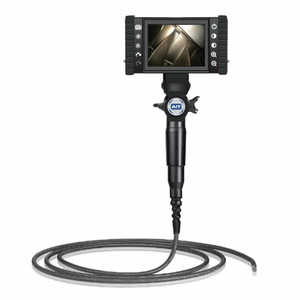
AIT VideoScope (AITVS)
AITVS is UL certified nonincendive for Class I Division 2, Groups A, B, C and D. That means the North American hazardous-location approval covers all four Class I gas groups rather than a single group.
The same system carries ATEX Zone 2 marking II 3 G Ex ic nA IIC T4 Gc. Those approvals use different classification systems and should be checked independently against the site's documented requirement.
AITVS is available in 28 configurations with 3.2 mm to 8 mm probe diameters and 1.5 m to 30 m insertion lengths, allowing the hazardous-location requirement to be matched with the physical inspection path after the classification is confirmed.
Product-fit boundary: AITVS is approved for Class I Division 2. Class I Division 1 locations require equipment approved for that classification, and the site remains responsible for determining the hazardous-location requirement before equipment is selected.
Why the Gas-Group Letter Can Decide Whether the Camera Is Accepted
Buyers often focus first on the words "Class I Division 2." During the site review, the group letter becomes just as important because it shows whether the equipment approval covers the gas or vapor assigned to that location.
A camera approved only for Group D does not become suitable just because both locations are Class I Division 2.
The group portion of the approval covers the full Class I Division gas-group range, but the Class and Division still have to match.
Check the ATEX marking independently instead of translating A-D into IIA, IIB or IIC by assumption.
Probe diameter, articulation and image quality become relevant after the hazardous-location approval is accepted. Confirming the Class, Division and gas group first prevents a technically capable camera from being rejected before the inspection begins.


