

A borescope temperature limit is the highest temperature an inspection camera or its specified component can tolerate under defined operating conditions. It is not one universal number. Some flexible videoscopes are limited to around 60°C to 80°C (140°F to 176°F), while selected industrial probe systems support use around 100°C (212°F). A pipe or turbine at 400°F (204°C) is a different inspection problem.
For buyers, the difference matters before the camera reaches the port. A probe tip may have a higher allowable temperature than the handset. Short-term exposure is not the same as continuous operation, and a hot wall can heat a probe even when the surrounding air seems cooler. This is why a borescope used for industrial inspection needs a temperature specification matched to the actual work.
Quick answer: Do not assume every borescope is safe up to 176°F. Check the exact probe-tip, insertion-tube and control-unit limits for the model, along with exposure duration and the conditions inside the asset. At 400°F, a standard 100°C videoscope is not an appropriate substitute for a separately qualified high-temperature system.
How Hot Can a Borescope Actually Get?
The numbers most often quoted for borescope temperature resistance refer to different instruments and different test conditions. A temperature printed beside the probe specification should never be applied automatically to its battery, monitor, cable connector or accessories.
These figures are comparison points, not a shared operating range or permission to insert a camera. Use the exact product limits and site procedure.
Why a Borescope Can Overheat Before You Finish the Inspection
The camera does not experience one uniform temperature inside a hot component. Heated metal, radiant energy, fluid residue and time in the opening can create exposure very different from a reading taken at the outside access port.

Mentor Visual iQ+ in an engine inspection. Probe contact, nearby hot surfaces and exposure time must each be considered before insertion.
Heat transfers through the probe braid and nearby structure; a short or curved route can still include direct wall contact.
Radiant heat from recently operated equipment can affect the tip even when it is not touching the surface.
A brief pass and a prolonged close inspection are different thermal loads; a warning feature does not extend the published limit.
Practical point: A hand-touch test at the opening is not a reliable measurement of the temperature deeper inside a vessel, turbine or pipe. Use a suitable, verified temperature measurement and the equipment's approved operating procedure before insertion.
What If the Pipe, Weld or Turbine Is Still at 400°F?
Four hundred degrees Fahrenheit is about 204°C, well above the 100°C operating-point examples above. A standard videoscope that works in a recently shut-down machine is not automatically suitable for a pipe held at welding preheat temperature.
Specialized high-temperature borescopes may use engineered cooling channels, compressed-air flow and protective constructions to keep sensitive camera components within their own allowable limits. Those systems are not simply standard probes placed inside an insulating sleeve.
Some cooled borescopes are specified only for dry environments. The presence of water, oil, chemicals, steam or combustible atmospheres changes the selection; a cooling-air setup is not approval for immersion or hazardous-location use. If the area is classified, see AIT's explanation of borescopes for hazardous inspection locations.
Three Hot-Inspection Situations That Look Similar but Are Not
A probe may enter a cooler passage before reaching a much hotter component. The inspection should begin only when the entire planned route meets the system and asset procedure.
A borescope for weld-root observation must tolerate the pipe's real preheat and local wall exposure, not just the workshop air temperature.
Large thermal mass and enclosed spaces can keep internal surfaces hotter than a nearby exterior reading. The equipment choice follows actual conditions, not a fixed waiting time.
These differences also affect inspection reach, direction of view and articulation. If the route is narrow or changes direction, the smallest restriction and the way the tip turns remain important after the thermal requirement is satisfied.
AIT Videoscopes for Inspections With Elevated Temperatures
AIT offers industrial videoscopes with different temperature-related capabilities. The examples below are not interchangeable high-temperature ratings; the selected probe, optical tip and complete system must be checked for the job.
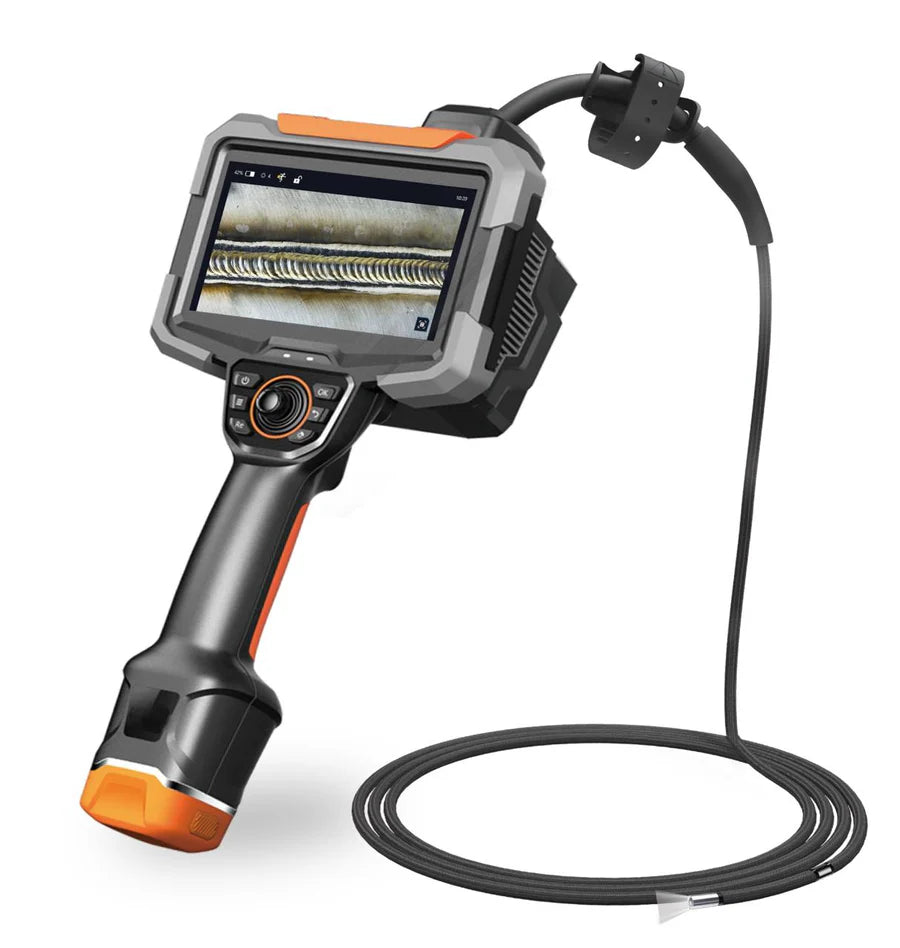
AIT K Series HD Videoscope
The K Series includes probe-temperature warnings at 70°C and 80°C, followed by an alarm and shutdown at 85°C. These are protective alert thresholds, not permission to operate continuously at 85°C. Its configurable 1.0 mm to 8.0 mm probe range can help solve difficult access after the allowable temperature is confirmed.
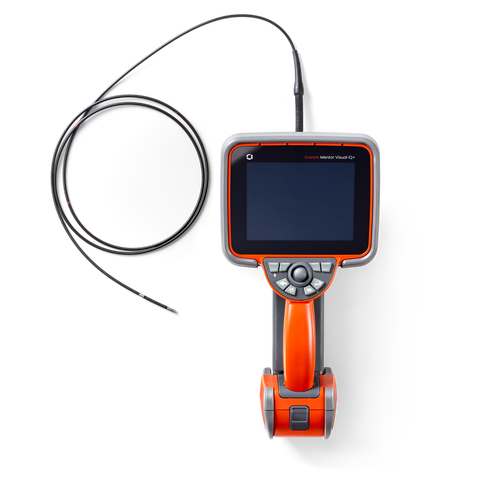
Mentor Visual iQ+ Video Borescope
The published tip operating range reaches 100°C (212°F), while the handset has a separate maximum operating temperature of 46°C (115°F). This distinction matters for inspections requiring 3D measurement and a controlled working environment outside the hot asset.

Everest Mentor Flex+ VideoProbe
Mentor Flex+ provides optimized imaging at temperatures up to 100°C (212°F), along with interchangeable 4.0 mm, 6.1 mm and 6.2 mm probes. It can be relevant when warm-engine or turbine inspections need high-quality images before full cooldown, provided the entire configuration and procedure allow it.
Does a Cooling Sleeve Make Any Videoscope High-Temperature?
No. Sleeves, air channels and temperature-resistant materials can be part of an engineered high-temperature inspection system, but their presence alone does not establish the usable camera-tip temperature. Heat can still reach the sensor through the lens housing, tube wall, optical interface or interrupted cooling flow.
A cooled system has to be assessed as a complete configuration, including the specified cooling supply and the procedure for loss of flow. Improvised insulation around a standard electronic borescope should not be used to invent a higher operating limit.
Where an alternative makes sense: If the job repeatedly requires inspection above the selected probe's documented limits, evaluate a purpose-built cooled camera, a different inspection method or a revised cooldown window rather than relying on an unsupported exposure allowance.
The Inspection Window You Can Lose Without Realizing It
Picture two inspection teams arriving at the same recently shut-down turbine. Both have a borescope that fits the access port. One has confirmed its tip rating, controller conditions and permitted inspection route; the other has only a headline temperature number. The first may have a usable inspection window. The second may discover the limitation after the opening is ready.
That is the detail worth knowing before the next outage or hot-pipe inspection: the temperature a camera can survive and the temperature at which it can finish the job are not necessarily the same.


